
Show Jumping: Basics, Techniques and Training Tips
Table of Contents
Show jumping is one of the most thrilling disciplines in equestrian sport. It combines speed, precision, trust, and teamwork between horse and rider in a way that few other sports can match. Watching a horse clear a towering oxer or a rider navigate a tight turn to a vertical fence is genuinely exciting, but what most spectators don't see is the years of foundational training that go into making it look effortless. Whether you're a complete beginner curious about the sport or someone already riding who wants to take the next step, understanding the basics, techniques, and training approach behind show jumping will set you up for real progress.
What Exactly Is Show Jumping?
At its core, show jumping is a competition where a horse and rider navigate a course of fences in a specific order, aiming to complete it with as few faults as possible and within the allowed time. Courses vary in height and technicality depending on the level, ranging from small cross-rails for beginners to towering combinations for professional competitors. But regardless of level, the fundamentals stay the same: balance, rhythm, and communication between horse and rider.
The Basics Every Rider Should Know
Before anyone even thinks about jumping a fence, they need a solid foundation on the flat. This means developing a secure, independent seat, learning to control pace and direction, and building a genuine feel for the horse's rhythm. Riders who skip this stage often struggle later because jumping simply amplifies whatever issues exist in the basic riding position.
A few essentials form the backbone of every rider's early training:
- Position and balance: A jumping position (or "two-point") that keeps the rider's weight forward and centered over the horse's balance point, without collapsing or gripping with the hands.
- Pace control: The ability to collect or lengthen the horse's stride smoothly, since approaching a fence at the wrong pace is one of the most common causes of knockdowns and refusals.
- Eye for a distance: Learning to judge the correct takeoff spot to a fence, which develops gradually with mileage and guided instruction.
- Confidence and calmness: Horses pick up on rider tension almost instantly, so staying relaxed is as much a skill as any physical technique.
This is exactly why structured lessons matter so much in the early stages. Enrolling in proper horse riding classes in Bangalore gives beginners access to trained instructors, safe schooling horses, and a progressive curriculum rather than trial and error.
Building Show Jumping Technique Step by Step
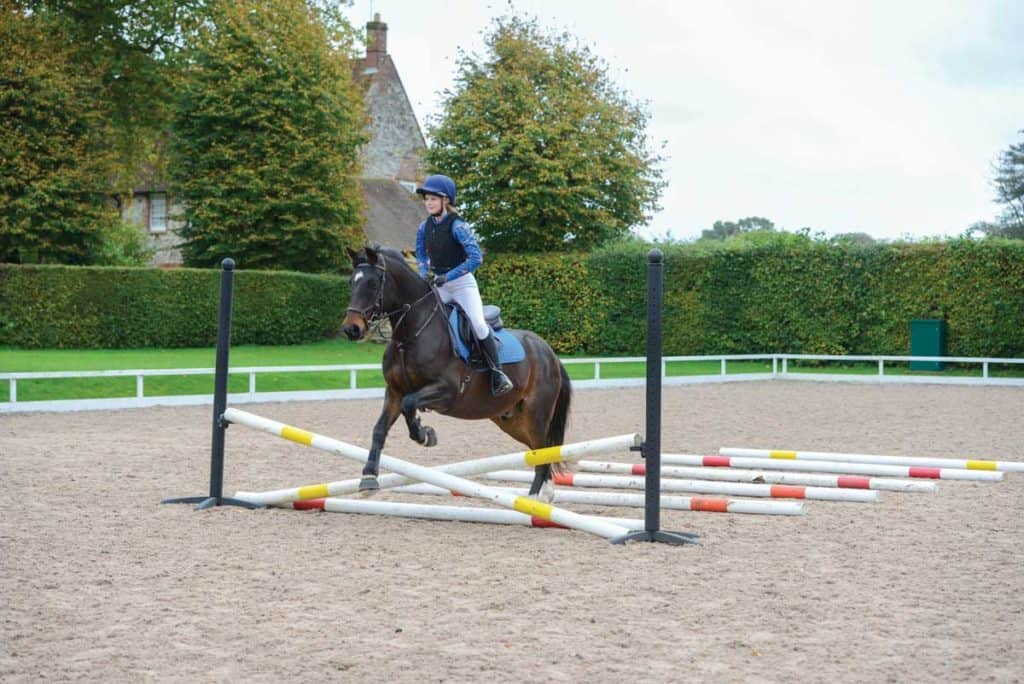
Once the basics are steady, riders move on to specific jumping techniques. This typically starts with poles on the ground to develop rhythm, then progresses to small single fences, then gridwork (a series of related fences set at specific distances), and eventually full courses.
Some of the key techniques developed at this stage include:
- Approach and release: Maintaining a consistent rhythm on approach and giving the horse enough rein at the point of takeoff so it can stretch its neck and jump freely.
- Landing and recovery: Staying balanced on landing so the rider can immediately re-establish rhythm for the next fence.
- Turning technique: Using the outside rein and leg effectively to shape turns between fences without losing pace or balance.
- Reading a course: Walking the course beforehand to plan the track, count strides between related fences, and identify tricky lines.
These skills are rarely mastered alone. A good horse riding academy in Bangalore will structure lessons so riders are introduced to each element gradually, under supervision, with immediate feedback to correct small errors before they become habits.
Training Tips for Steady Progress
Progress in show jumping isn't about rushing to bigger fences. It's about consistency, patience, and quality repetition. A few tips that make a real difference:
- Prioritize flatwork. Even experienced jumpers spend most of their training time on the flat, refining balance, suppleness, and responsiveness.
- Don't skip gridwork. Grids build a horse's and rider's instincts for stride adjustment without either party having to think too hard about it.
- Keep sessions varied. Repeating the same exercises constantly can dull a horse's enthusiasm; mixing in hacking, flatwork, and low-key jumping keeps things fresh.
- Work with a qualified coach. Self-teaching from videos only goes so far; a trained eye on the ground catches issues a rider can't feel themselves.
- Be patient with height. Raising fences before the fundamentals are solid is one of the most common causes of confidence issues in both horse and rider.
Choosing the right place to train matters just as much as the training itself. Among the various horse riding schools in Bangalore, look for ones with experienced coaches, well-schooled horses, and a genuine focus on safety and long-term development rather than just quick thrills. If you're searching for the best horse riding classes in Bangalore, take time to visit a few facilities, watch a lesson in progress, and ask about their training philosophy before enrolling.
Structured Learning Makes the Difference
Many riders, especially adults returning to the sport or beginners starting fresh, benefit enormously from structured horse riding courses that follow a clear progression—from groundwork and basic riding skills to introductory jumping and eventually course work. This kind of structured approach reduces the risk of gaps in a rider's foundation and builds genuine, lasting confidence in the saddle.
Where to Begin Your Show Jumping Journey
For riders in Bangalore looking for structured equestrian training, Zippy Equestrian Center offers riding programs for beginners and more experienced riders, including show jumping training. They offer training for riders of all levels, from complete beginners to those working on competitive show jumping, with experienced instructors and a focus on horse and rider welfare.
Zippy Equestrian Center
- Address: 102/2, Next to Sports Drome, Opposite Jain Public School, Puttenahalli, JP Nagar 7th Phase, JP Nagar, Bengaluru - 560078
- Contact: 09882988267
- Website: https://www.zippyequestrian.com/
Frequently Asked Questions About Show Jumping
Most academies accept children from around 6-7 years old, starting with groundwork and basic riding before any jumping is introduced.
No. Most beginners start on well-trained school horses provided by the riding academy, so owning a horse isn't necessary to begin.
The timeline varies from rider to rider. With regular lessons and consistent practice, some beginners may develop basic jumping skills within several months, while others may need longer.
Yes, show jumping can be introduced safely to beginners when training is progressive, supervised by a qualified instructor, and supported by appropriate safety equipment and suitable horses.
A properly fitted riding helmet, comfortable pants (jodhpurs if available), and boots with a small heel are the basic essentials most schools recommend.


Leave A Comment